Posts

Showing posts with the label User-interface

2024-03-20: The Curious Case of Twitter's Server-Side UI
Image
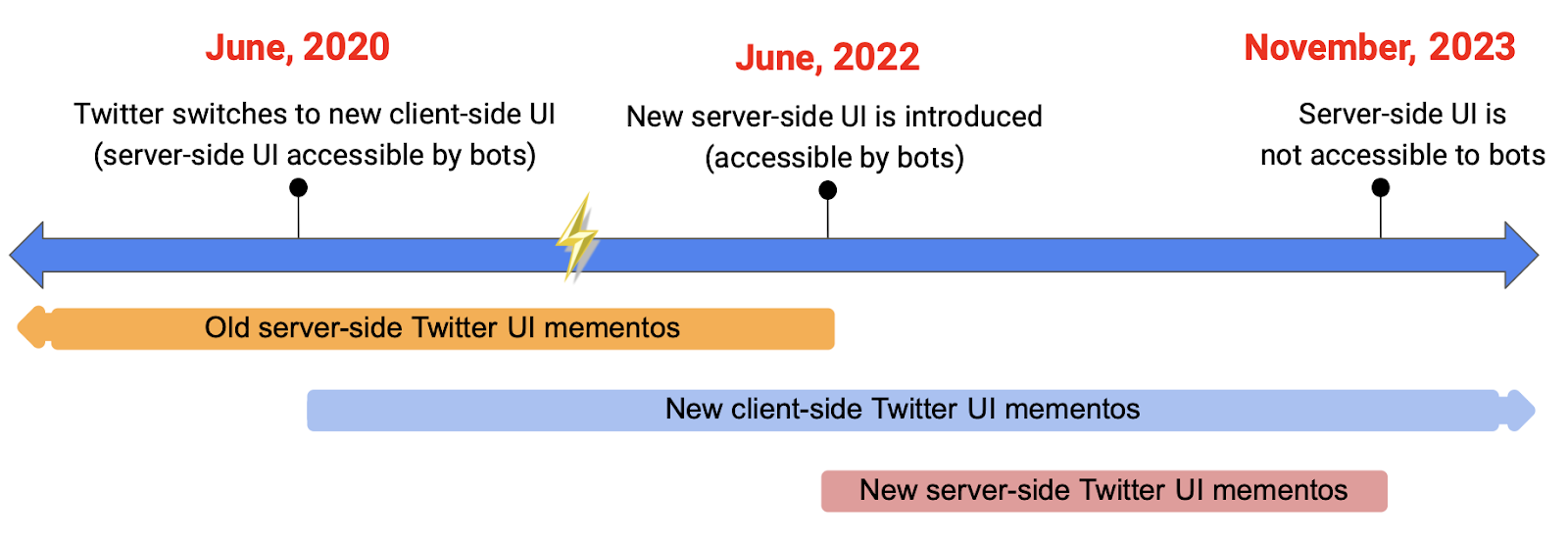
Web archives are essential for researchers studying Twitter, offering a historical perspective on evolving conversations and trends. Archives ensure data integrity and preservation, which is crucial in a platform where content can be deleted or even, in some cases, modified. Additionally, web archives allow technical analysis of social media changes, enable comparative studies across time and platforms, and provide cultural insights, making them an essential resource for researchers in various fields. However, archiving Twitter has always been a challenge. Archiving Twitter is challenging not only due to the massive volume and dynamic nature of tweets but also because of Twitter's continually evolving user interface (UI). Studying the history of Twitter through web archives can lead to confusion, especially when encountering mementos that display different Twitter UIs from the same period.  This blog delves into the nuances of two types of Twitter UIs, client-side and server-side, ...
2023-11-17: Taming User-Interface Heterogeneity with Uniform Overlays for Blind Users

Image
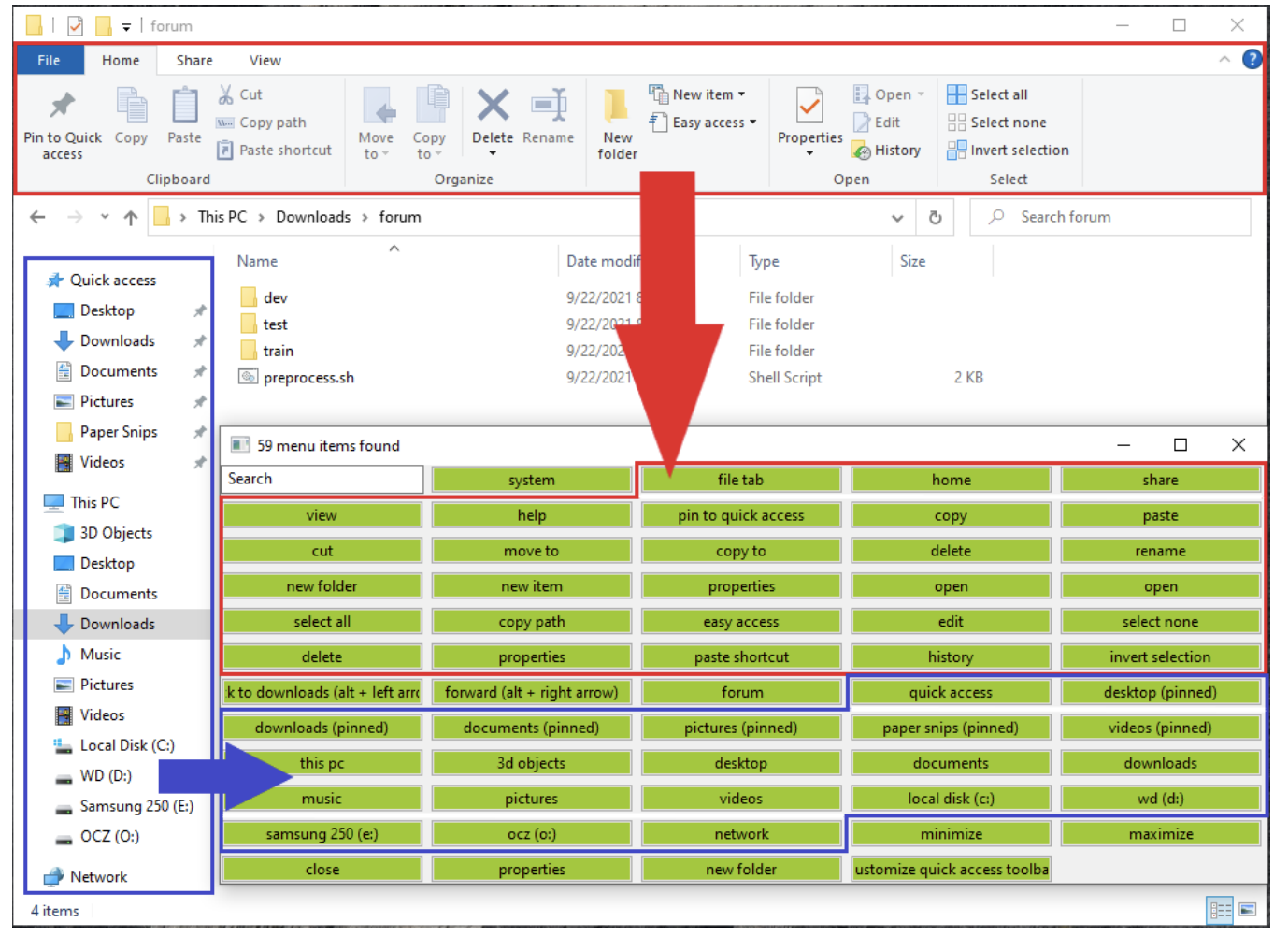
  Figure 1: Example of AccessBolt with File Explorer application. (Figure 1 from Utku et al.) Introduction User interface (UI) automation is the process of programmatically controlling and testing the UI of applications. In our last blog on UI automation, we talk about the ideas of using it and walkthrough of these interesting tools using the Python programming language. The main purposes of UI automation are to simulate user interactions for testing, increase test coverage, and reduce repetitive manual testing. In this blog, we are going to talk about a recently published paper named “ Taming User-Interface Heterogeneity with Uniform Overlays for Blind Users, ” published at the UMAP 2022 conference, where Utku et al. explored how to improve the accessibility of desktop application interfaces for blind individuals who rely on screen readers . The paper introduces a novel system called AccessBolt that aims to make interacting with desktop software easier and more efficient using...